The Lab of Urban Plant Ecology at Cornell has a few different areas of research, all focused around plant and animal communities in urban ecosystems, and how they influence human-nature interactions.
Lab Goals:
-
Understand the drivers of biodiversity patterns & processes in urban ecosystems
-
Protecting & facilitating ecological novelty & heterogeneity in cities
-
Investigating, and where relevant, adopting novel management strategies
-
Adapting horticultural landscapes to be more diverse & supportive of natural processes
.
Below are some example projects we have up and running
Spontaneous urban plant and animal communities
Urban community gardens are important for human well-being and local food production, but they also play a role in shaping urban plant and animal communities. While we have a general understanding of the cultivated species that exist in these urban gardens, much less is known about the wild species that colonize these gardens naturally. The diversity and composition of these communities are important for urban biodiversity, but also for food production, especially when considering groups of species such as pollinators and natural enemies of pests.
In addition to community gardens, there are a diversity of overlooked habitats that harbour unique, diverse plant and insect communities – including roadside vegetation, vacant lots, riparian verges, and more. Our work is focused on understanding what local-scale and landscape-scale factors influence these communities, and how can we support a diversity of wild species in urban community gardens. We are working with field collected data of plant and animal communities, as well as garden features, such as bee-hotels, bare soil, tree cover and more. This work has been carried out with large collaborations from Dr. Monika Egerer’s lab at the Technical University of Munich (upe-lab.de).
For an example of some of this work, check out this recent publication: https://onlinelibrary.wiley.com/doi/10.1002/ece3.71527
We’re now getting started in New York City focused on community gardens in the Bronx and Brookyln.


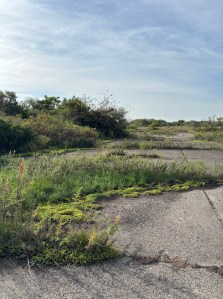
We’re now also working in NYC’s beautiful abandoned airport – Floyd Bennett Field. Here’s were surveying the plant communities popping up on the old runways, dunes, and grasslands. Understanding the patterns and processes of the plant communities here can better inform meta-community dynamics of cities more broadly as these are valuable, but often overlooked habitat types.


.
Restoring plant-pollinator interactions in urban ecosystems
Plant-pollinator communities offer valuable insights into meta-community dynamics of urban ecosystems as they have variable dispersal, competitive and tolerance capabilities. Their species interactions, community compositions, and fitness levels across various urban habitats can allow us to better understand which species, and traits, outperform and underperform across cities. This can help us better understand how urban meta-communnities function, but also how to preserve ecological novelty and maintain importance facets of biodiversity, such as rarity, beta diversity, and resiliency. Further, as pollinators are flagship species, they are important to many urban residents and allow for an avenue of science communication and increased engagement with local communities.
We collect data on plant-pollinator communities across cities gobally to develop basic and applied findings, and work with a series of international collaborators to leverage their data as well. If you’re working on a similar topic and interested in collaborating – let’s chat.


Floral Phenology
Increasing temperatures and changing moisture regimes are known to cause shifts in floral phenology. These phenological shifts have been extensively studied in montane regions and using experimental tools. Our research is focused on understanding how floral phenology is influenced by urbanization and local habitat characteristics. We are interested in how the urban heat island, as much as 5-7°C, interacts with climate change, and microclimate variation to influence phenology of a range of species and genotypes.


.
Urban Wildfires
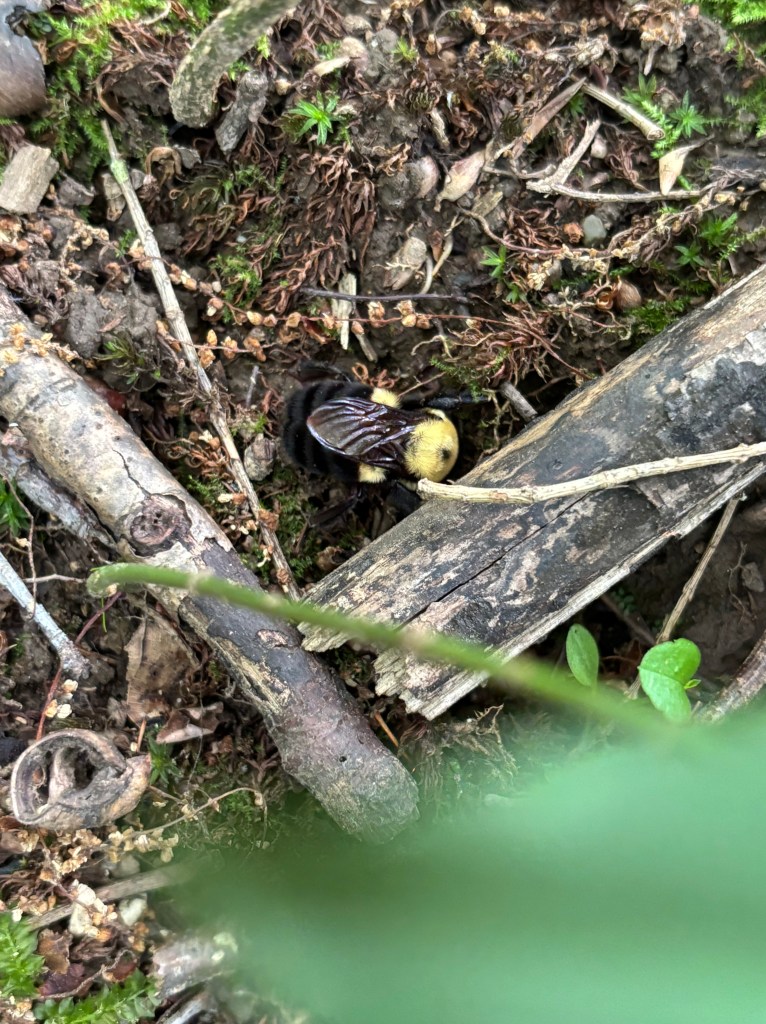
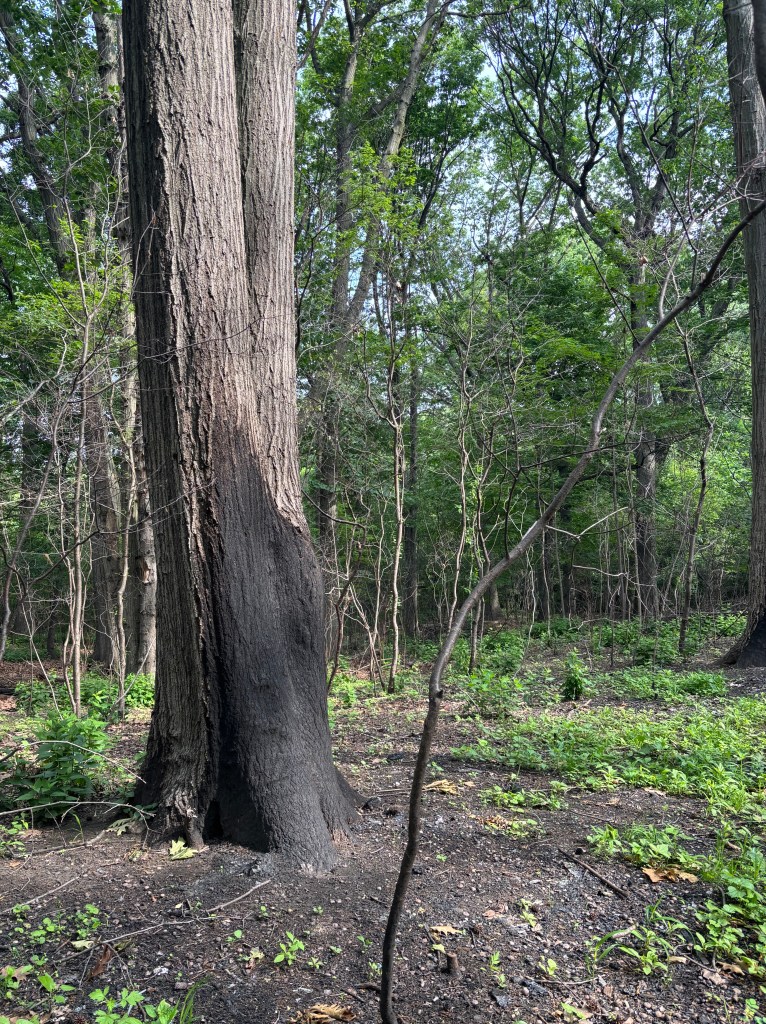
In 2024, several large forest fires broke out in the center of New York City – a region previously thought to be relatively safe from such risk. These fires burned well over a dozen of acres of forests across New York’s boroughs. While these fires were a shock to many, and the realization of a novel form of climate risk, they offer a unique and exciting research opportunity. Large-scale urban wildfires are, to this point, an extremely rare occurrence in North America, therefore there is extremely limited research on their impacts and future risks. Our work sets out to understand the ecological responses to these urban fires and will inform future management plans and identify strategies to prevent dangerous uncontrolled fires.
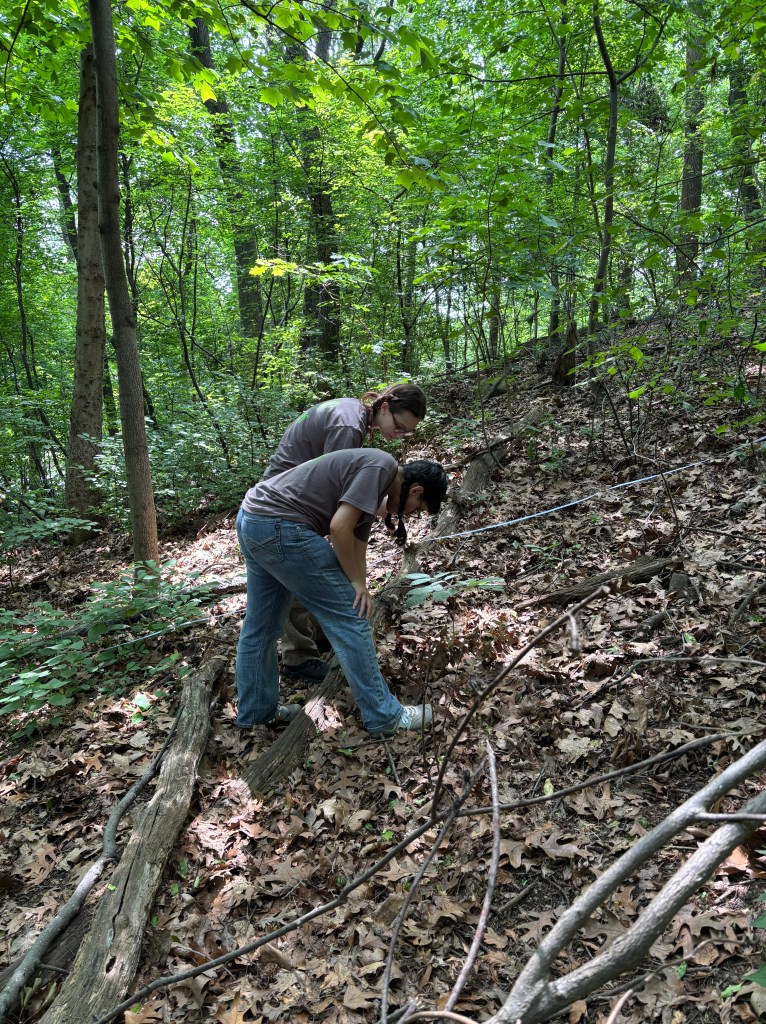
In 2025 we began surveying two of the largest urban wildfires – in Prospect Park in Brooklyn & Inwood Hill Park in Manhattan. We’re already seeing some interesting results from this project, so stay tuned for updates and results!

.
Human-nature interactions in urban habitats
What management practices influence meta-community dynamics? How can we moderate these to increase urban biodiversity beyond simply alpha diversity? How do these meta-community dynamics in-turn influence human perceptions of urban biodiversity and the ways that humans interact with urban plants and animals?
These are some of the research questions our group is focused on understanding. This includes survey work, outreach, and human perception studies.
 Aaron Sexton